

In Manhattan, the question is not simply whether one can afford to purchase a residence. It is whether the property available for purchase justifies the commitment of ownership.
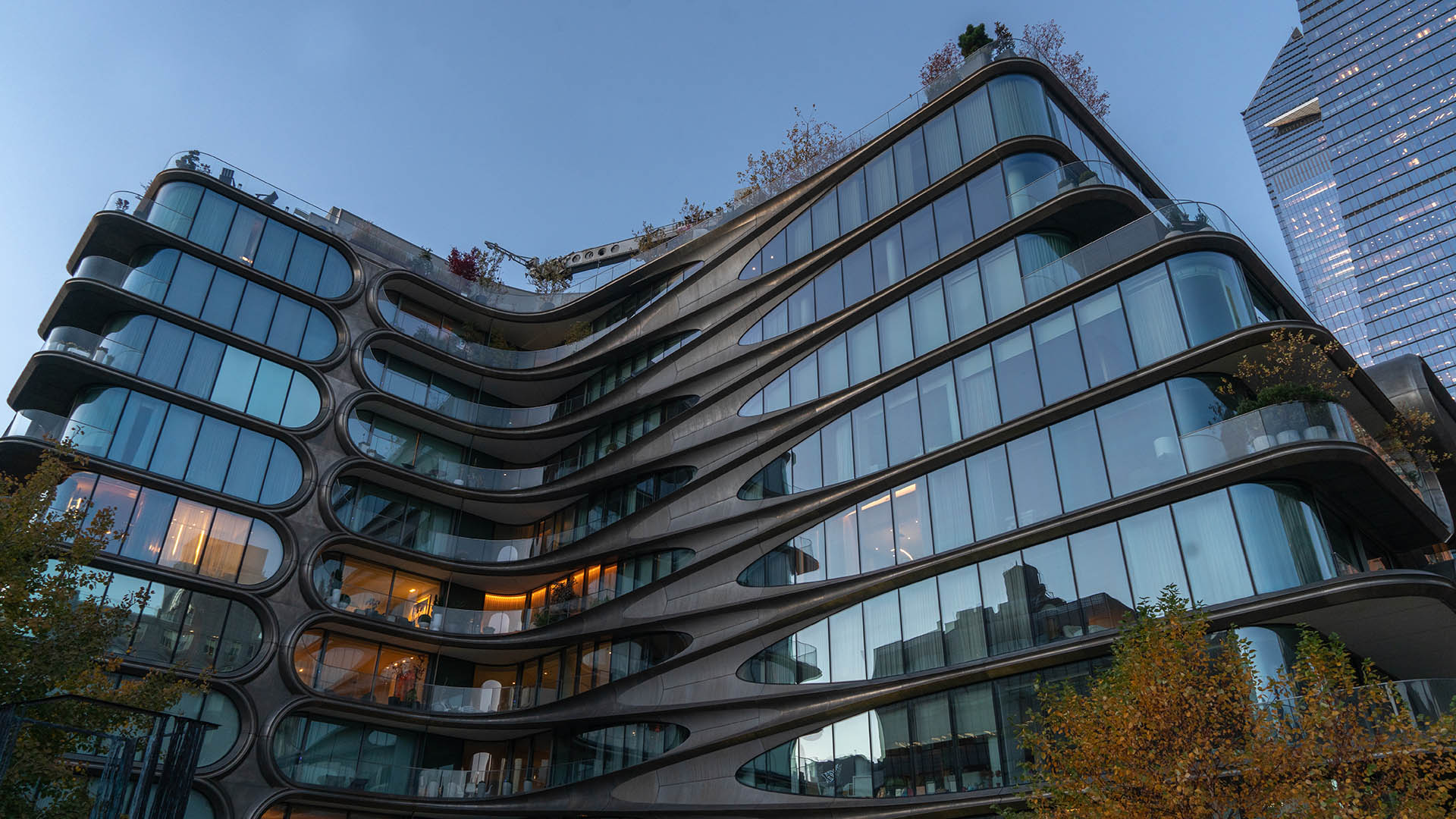
In October 2026, a three-bedroom apartment at 520 West 28th Street, the Zaha Hadid-designed condominium overlooking the High Line, rented for $30,000 per month.
The same residence had been offered for purchase at $7.9 million.
The obvious comparison is between $360,000 in annual rent and the cost of acquiring the apartment. But for someone capable of either choice, that is not necessarily the most consequential question.
A more useful inquiry is whether the apartment represented an attractive acquisition at $7.9 million, given the building’s resale history, the prospective buyer’s intended holding period, and the alternatives available in the market.
The distinction is fundamental. Renting may be the better decision not because ownership is undesirable, but because the opportunity to purchase a particular property is not necessarily an opportunity worth pursuing.
Appreciation Is Not a Manhattan-Wide Proposition
Manhattan’s residential market is frequently discussed through broad measures: median prices, price per square foot, annual appreciation, and neighborhood performance.
These measures provide context. They are considerably less useful when evaluating the future performance of an individual residence.
Two condominiums in the same neighborhood can produce markedly different outcomes. Even within a single building, apartments may appreciate at different rates—or move in opposite directions.
The reasons extend beyond location.
Floor-plan efficiency, ceiling heights, exposures, views, privacy, outdoor space, and the scarcity of comparable residences influence long-term desirability. Building management, financial reserves, common charges, and the potential for future assessments can materially affect resale value.
Equally important is the acquisition price.
A buyer can select an exceptional building and still make an unattractive investment by paying a premium that subsequent purchasers are unwilling to recognize.
This deserves particular attention in new developments.
The original purchaser may pay for the appeal of new construction, distinguished architecture, comprehensive amenities, and a carefully orchestrated sales presentation. Those qualities can be genuinely valuable. But the first resale introduces a different test: whether the apartment remains compelling when it competes with other available properties, without the advantages of a developer’s initial marketing campaign.
Architectural significance does not necessarily translate into financial outperformance.
At 520 West 28th Street, an examination of nine recorded resale transactions shows an average cumulative price change of approximately negative 8.7%, over an average holding period of 5 years.
The results were not uniform. Some residences appreciated, including the penthouse, while several others changed hands at substantial discounts to their preceding purchase prices.
These transactions constitute a relatively small sample, with differences in apartment characteristics, improvements, and holding periods. They are not a forecast of future building performance.
They do, however, demonstrate why I would be reluctant to recommend an acquisition based primarily on the building’s reputation or architectural pedigree.
The quality of the building matters. The quality of the individual apartment and the price paid for it matter just as much.
What the Rental at 520 West 28th Reveals
Apartment 29 offers a useful example because both sides of the residential decision were observable.
The apartment originally sold in 2019 for approximately $8.33 million. It was offered for resale at $8.8 million in February 2025, subsequently reduced, and ultimately marketed at $7.9 million before the sale listing was withdrawn.
In August 2026, Apartment 33, a similarly sized three-bedroom residence in the same building, sold for $7.9 million.
Two months later, Apartment 29 was recorded as rented for $30,000 per month.
The rental does not establish that the apartment was worth less than its advertised purchase price. Nor does it tell us why the tenant preferred to rent.

But consider the decision from the perspective of a prospective purchaser expecting to occupy the property for three to five years.
At $7.9 million, the buyer would be acquiring a residence in a building with mixed historical resale outcomes, following an extended marketing period and several reductions in the apartment’s asking price.
Before recommending that purchase, I would want to establish what justified the entry price relative to other apartments in the building, competing condominiums in West Chelsea, and the likely depth of the future buyer pool.
I would also examine what distinguishes Apartment 29 from alternatives a purchaser might consider when it returns to market. Is its particular combination of views, layout, and exposure sufficiently scarce to preserve a premium? Or would a subsequent buyer have numerous comparable choices?
Those questions become more consequential when the anticipated ownership period is short.
Our preliminary rent-versus-buy modeling suggests that, under an all-cash purchase assumption and a hypothetical 4% annual return on invested capital, renting could produce a financially superior result over several years unless the apartment achieved sufficiently strong appreciation.
That conclusion is sensitive to investment returns, transaction expenses, taxes, rental terms, and future property values. It is not a prediction.
The underlying issue is more durable: a short holding period leaves less room for an acquisition error.
If the purchaser pays too much, the combination of transaction costs and an uncertain resale market can be difficult to overcome, even in a highly desirable neighborhood.
Renting transfers that particular exposure to the owner while preserving the occupant’s ability to make a different residential decision later.
The Same Question at a Different Scale
In January 2026, the North Penthouse at 565 Broome Street, designed by Renzo Piano, was recorded as rented for $150,000 per month.
The residence originally sold in 2019 for approximately $36.5 million.
At this level, the decision is not necessarily whether the prospective resident possesses the means to purchase. It is whether committing tens of millions of dollars to a highly specialized residential asset is desirable for the intended period of occupancy.
The distinction between a trophy residence and a broadly marketable apartment becomes particularly important at resale.

An exceptional penthouse may possess characteristics that are almost impossible to replicate. That scarcity can support substantial value. Yet the number of buyers willing and able to acquire it at a particular moment may be comparatively limited.
Scarcity and liquidity are not interchangeable.
A residence can be genuinely rare without being easy to sell at the owner’s preferred price.
For someone contemplating a relatively brief stay, renting may provide access to the property’s exceptional qualities without requiring a judgment about its eventual resale value.
We cannot know the actual tenant’s motivation. The transaction is useful because it illustrates the scale of the capital-allocation decision, not because it reveals the reasoning behind it.
When I Would Favor Renting
I would be inclined to recommend renting when the intended holding period is relatively short, the available purchase opportunities are unconvincing, or the asking prices require optimistic assumptions about future appreciation.
I would be particularly cautious when an apartment carries a substantial premium that cannot be supported by recent comparable transactions or clearly identifiable advantages.
The question I would ask is straightforward:
If the property had to be sold in three years, what would a subsequent purchaser have to believe for the acquisition to have been worthwhile?
If the answer depends on a stronger market, a scarcity premium that has not been demonstrated, or a buyer willing to overlook meaningful compromises, I would question the purchase.
This does not mean rejecting properties that are distinctive or expensive. It means distinguishing between paying for enduring qualities and paying for expectations that may not survive the next resale.
There is also a circumstance in which renting is particularly sensible: when the buyer has not found a property that merits ownership.
The cost of waiting can be measured in rent. The cost of purchasing poorly may involve transaction expenses, diminished resale value, and years of capital committed to a property that was never the right acquisition.
Those costs are not necessarily comparable.
Ownership Should Be Earned by the Property
I remain a strong believer in residential ownership when the circumstances justify it.
A well-selected residence, acquired at a defensible price and held for an appropriate period, can provide lasting personal and financial value.
But I would not recommend purchasing simply because a client has the capital, expects Manhattan prices to rise, or considers rent an expense that should be avoided.
The investment merit of a Manhattan residence cannot be separated from the particular building, apartment, acquisition price, and eventual exit.
And the decision cannot be separated from the client’s intended use of the property.
The appropriate advice may be to purchase immediately, negotiate more aggressively, continue searching, or rent until a more compelling opportunity emerges.
The objective is not ownership for its own sake. It is to make the right residential decision—and sometimes that means declining to purchase a property that is perfectly affordable.
Research note: Property figures reflect publicly reported transactions and listing histories through October 2026. The building resale statistic is based on a limited sample of repeat transactions and represents cumulative, not annualized, performance. Financial scenarios are illustrative rather than forecasts; results depend on individual tax circumstances, investment returns, holding periods, and property-specific costs.